
Why I turned off the detective show
Aug 04, 2026
THE PROSPEROUS CONSULTANT
Turn your decades of expertise into a premium consulting practice built around the life you want.
Issue #30
A few nights back I was in my recliner with the remote in hand, little Bella in my lap, tempted to watch a true crime documentary.
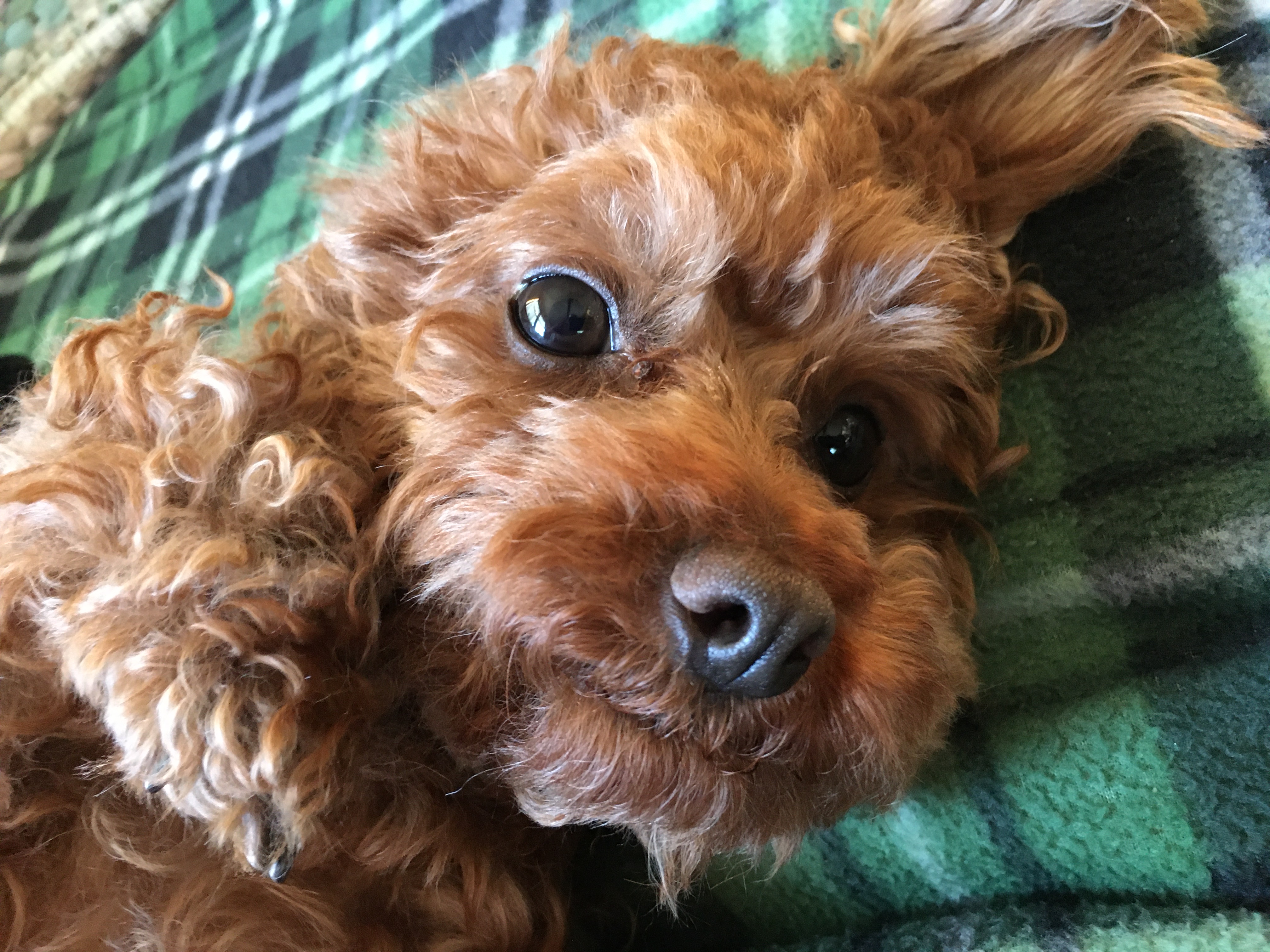
My little buddy Bella
I love those shows. I'm drawn to them for some reason. Maybe it's because my son is a detective. Plus I like the way a good detective works a case... reading patterns, testing theories, interviewing witnesses... it's about the closest thing television has to watching a consultant work a business problem. Give me a cold case and an investigator with the tenacity of a honey badger and I'm settled in for the night.
But I turned the show off.
Not because the show was bad. Because of where it leaves me emotionally, almost without me even realizing it. Two hours of murder and I don't exactly come away uplifted. I usually go to bed with this undercurrent of negative emotions working in my subconscious.
Maybe you've got a vice like that too. Something you enjoy that never leaves you in a positive place.
In this issue, we'll explore very normal activities that should be avoided if you want to build a successful consulting business, plus:
- Why your emotional state is a business asset... and what pulls you down without you even noticing
- The daily emotional hygiene habits... four very different experts all agree on
- What I do (and what I avoid) to stay in the positive half of the emotional whirlwind
Last week I showed you the emotional whirlwind. Positive emotions on top, negative on the bottom.
Do your pipeline work from the bottom half and everything feels like pushing a rope uphill. If you missed that issue, here's the short version: your lead generation problem probably isn't a discipline problem. It's an emotional state problem.
But locating yourself in your emotional whirlwind is only half the job.
The part we don't like to talk about is that our mindset and attitude are under attack all day, every day, and the attacks don't announce themselves.
The news over lunch. The feed you thumb through at the gas pump (please tell me you don't do that). The show at night. The phone call from a relative that's mostly whining and complaining. Each one nudges you down into the negative feelings within your whirlwind.
You drift down one emotion at a time, and the ride is comfortable enough that you don't notice. Then the next day you sit down to do the most important work in your business... the outreach, the follow-up, the message to that person who's come to mind three times... and just the thought of the work weighs forty pounds. You blame your self-discipline. You blame your age. You blame everything except the inputs you allowed to affect you the days before.
Your emotional state requires intentional maintenance, the same as the rest of your body and your overall health. Nobody's shocked when a man who lives on gas station food, skips sleep, and never takes a walk is exhausted by two in the afternoon. Nobody calls his body lazy... we all know it's been running on junk. Yet we expect our emotional state to stay strong on a steady weekend diet of bad news and murder shows, and then we're mystified when it won't get up and go on a Monday...
Emotional state is a maintenance job.
And here's how I know. I've spent years learning from teachers who would hardly agree on what day it is, but a few things, the most important things, they DO agree on.
Joe Dispenza comes at it from neuroscience. Tony Robbins is a performance coach. Phil Stutz and Barry Michels are psychotherapists with decades of patients between them. Randy Alcorn is a theologian. Four different worlds. Four examples who have completely different vocabularies.
All four hand you the same tool.
Dispenza says do your state work first thing in the morning, before the body wakes up and starts running yesterday's programs on autopilot.
Robbins built his morning around ten minutes of what he calls priming... breathing, gratitude you actually feel, seeing the day going your way... because, as he puts it, you can't be fearful and grateful at the same time.
Stutz and Michels teach a tool they call the Grateful Flow: the moment negative thinking rolls in, you counter it with specific gratitude, right then, because negativity left unchallenged doesn't stay put... it recruits more negativity.
And Alcorn, after four hundred some pages on the subject, lands here: happiness is a choice, practiced like a discipline... not a temperament some people are born with.
When the neuroscientist, the coach, the shrinks, and the theologian all hand you the same tool, pick it up.
There's science under it too. Barbara Fredrickson's research... the same work behind last week's issue... shows a lifted state literally widens the set of moves you can see, and a fearful one narrows it. That's mechanics, not wallpaper positivity.
So here's the maintenance schedule. Three moves.
First: guard the gate to your mind. Take one honest day and audit what you let in. The shows. The news. The feeds. The conversations. I won't tell you what to cut, because you already know. My true crime habit is mine. Yours might be cable news, or the dude who calls every week with a fresh disaster. The test isn't whether it's entertaining. Plenty of what pulls you down is fun in the moment. The test is where it leaves you ten minutes after. If the answer is lower, it's costing too much.
Second: prime the pump before the day primes you. Ten minutes, first thing, before email and before news. Breathe like you mean it. Then feel... don't list, feel... three things you're grateful for. Robbins stays with each one until it registers in his body. Dispenza would say you're rehearsing the person you intend to be today before the old programs get their vote. Call it whatever you want. Ten minutes before the world gets its hands on you.
Third: interrupt fast. You'll get knocked down anyway... life keeps life-ing, as they say. The skill is catching it fast. The moment the black cloud rolls in, go to specific gratitude, right there in the truck or the checkout line. Be like water, as Bruce Lee once said. Stutz and Michels say the idle moments... traffic, hold music, waiting rooms... make perfect cues. And don't try to jump the whole whirlwind in one leap. Last week's rule stands: you can't get from despair to joy, but you can get from frustration to interest. Take the step that's actually in front of you.
Now, before you write me off as the guy telling you to grin through a house fire... negative emotions do in fact have a purpose. Fear is a smoke alarm. Grief has its season, too, and so does righteous anger. When the alarm goes off, check the house. I'm not asking you to unplug it. I'm asking you to not simply buy a recliner and accept it. Feel what needs feeling, learn what it came to teach you, then climb to a higher state. Now. Staying down in the negative beyond the time it takes to learn the lesson doesn't honor anything. It just costs you the health and dreams.
Hold your higher emotional state and the payoff shows up in places you can measure. The message goes out on Tuesday instead of, well, never. The follow-up happens while the prospect still remembers your name. The hard call gets made from a state where you can see all your options instead of the tunnel vision that reveals only the ugliest ones. Do your work from the top half of your whirlwind and the work itself gets lighter and easier.
But the bigger payoff isn't in the pipeline. I said it last week and it bears repeating: prosperity isn't a number you finally hit. It's the joy and happiness you experience while you're building. Build from the top half and you get a better business and a better life.
Three things to take with you:
1. Higher emotional states are maintained, not found. Daily, boring, scheduled... the way you'd maintain all other parts of your health.
2. Everything you let in is either lifting or lowering your emotional state. Audit the gates. It might feel good now, but the test is where it leaves you ten minutes after...or tomorrow.
3. Gratitude is the fastest interrupt there is. Four experts from four worlds agree. Use it the moment the cloud rolls in, and take the smallest step up.
P.S. Most nights now, when I'm tempted to watch, I take the dogs out for a walk instead. Ten minutes walking the fence line while the sky does whatever it's going to do. I don't come back any smarter about cold cases. I come back happier and more grateful than I left. That's a trade I'll take every time.
Want to dive deeper? Check out these related articles:
👉 The Prosperous Consultant | Issue #29
👉 The Prosperous Consultant | Issue #28
You might also find these interesting:
🔎 Client Value Journey: Stage 5 – Excite
🔎 The "Message Transformation" Prompt
P.S.: When you're ready, here are more ways I can help you...
Business Advisors Needed:
If you’re looking to scale strategically, attract better clients, and create sustainable momentum, let’s talk.
Design a Consulting Practice That Pays Well and Lets You Live Well
A free weekly newsletter for consultants who want predictable income, premium positioning, and sustainable growth.
In The Prosperous Consultant, each issue explores how to design your business around how you want to live, covering pricing, positioning, mindset, and practical strategies that create real options over time.
We hate SPAM. We will never sell your information, for any reason.
